Why a R20 share is not automatically cheaper than a R200 share
A low share price can catch your eye, but it does not tell you what the company is worth. A few other numbers can give you much better context before you invest.


You open your broker app with R200. One share costs R20, and another costs R200. It is easy to look at the first one and think, “I can buy ten of those, so it must be cheaper.” However, the price alone does not always tell you that.
A lower share price does not mean a cheaper company
Ten R20 shares might look like more for your money than one R200 share. The number of shares in your account still tells you nothing about which company is cheaper relative to its value or earnings.
A share price tells you what one share costs. It does not tell you what the company is worth. Market capitalisation can offer more context. It is the share price multiplied by the number of shares in issue. A company with one billion shares priced at R20 has a market value of R20 billion. A company with 50 million shares priced at R200 has a market value of R10 billion. In that example, the company with the R200 share has the lower market value.
EasyEquities explains the difference between small, medium and large market capitalisation companies. Remember, a company can also buy back shares, which changes the number of shares in issue and can affect per-share figures.
 Liz Thorne
Compare price with what the company earns
You can also compare the share price with earnings. The JSE defines the price-to-earnings ratio, or P/E ratio, as the market price of a share divided by earnings per share.
For example, if the R20 share earns R1 per share, its P/E ratio is 20. If the R200 share earns R20 per share, its P/E ratio is 10. On that measure, the R200 share is cheaper relative to earnings. You also need to know what you are buying. ETFs and local shares give you different types of exposure, even when both appear in the same investment app.
 Liz Thorne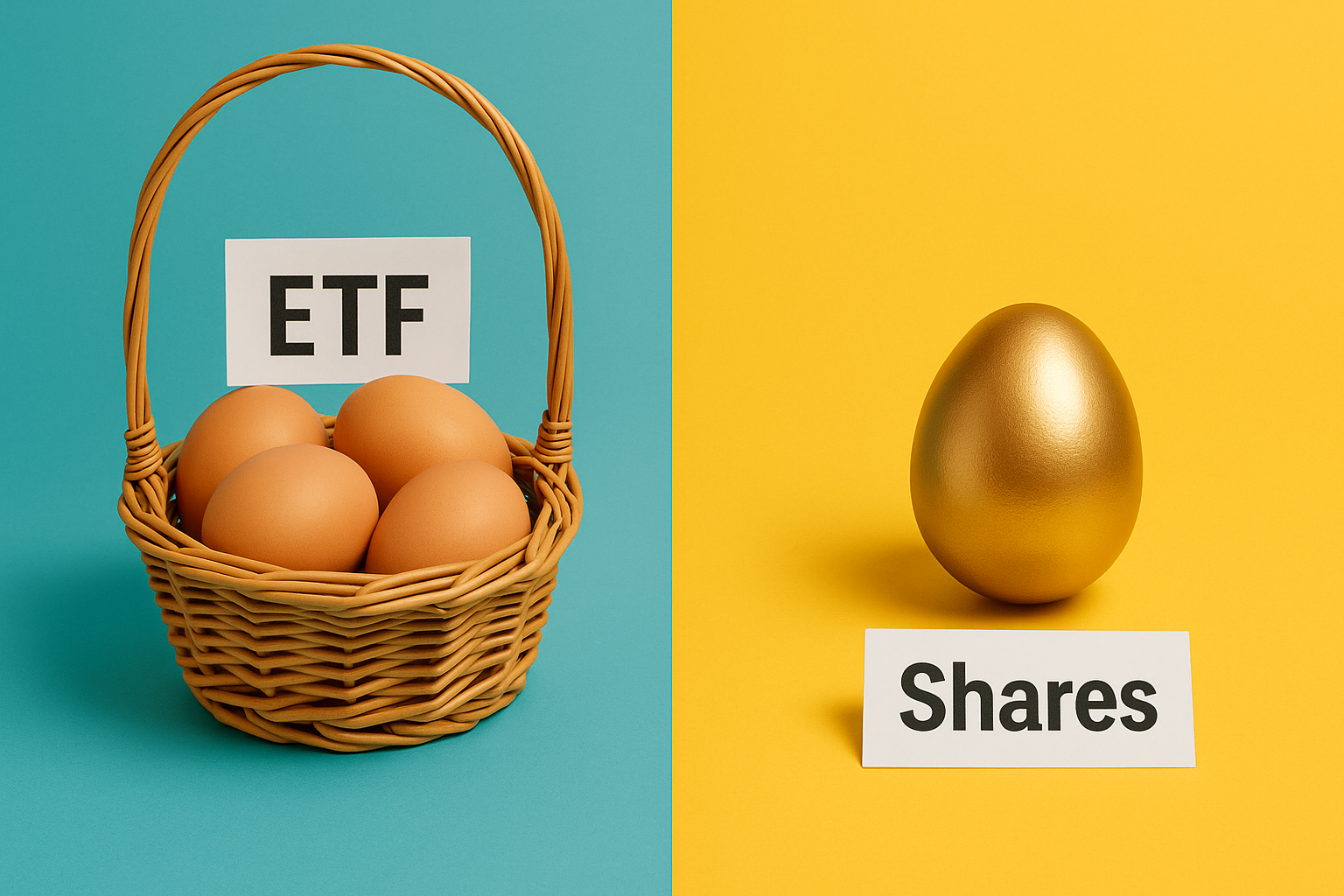
The first number on your screen is only the starting point
A R20 share can be expensive. A R200 share can be cheaper on valuation. The number beside the company name cannot answer that on its own. Dividends give you another figure to check. Standard Bank explains that dividends are payments companies make to shareholders, usually in cash or additional shares. If you invest for income, it also helps to understand why the dividend paid into your account can differ from the amount declared.
 Liz Thorne
Ten shares can give you a smaller percentage of one company than a single share gives you of another. The share count in your account can be misleading when you compare investments.
Buying more units can be satisfying, especially when your budget stretches to ten shares instead of one. Your decision becomes more informed when you compare what the company earns, how many shares are in issue and what you are paying relative to those figures. The cheaper-looking share can lose its appeal once you do the maths behind the price tag.
 Anchen Coetzee
 Anchen Coetzee
 Naomi Roebert
 Mariana Balt





Comments ()