
The rand’s rough Monday and what a Hormuz scare does to SA wallets
Geopolitics is back in your budget! Oil costs more than $100 per barrel, the rand is facing a rough Monday, and the effects go well beyond the petrol price.
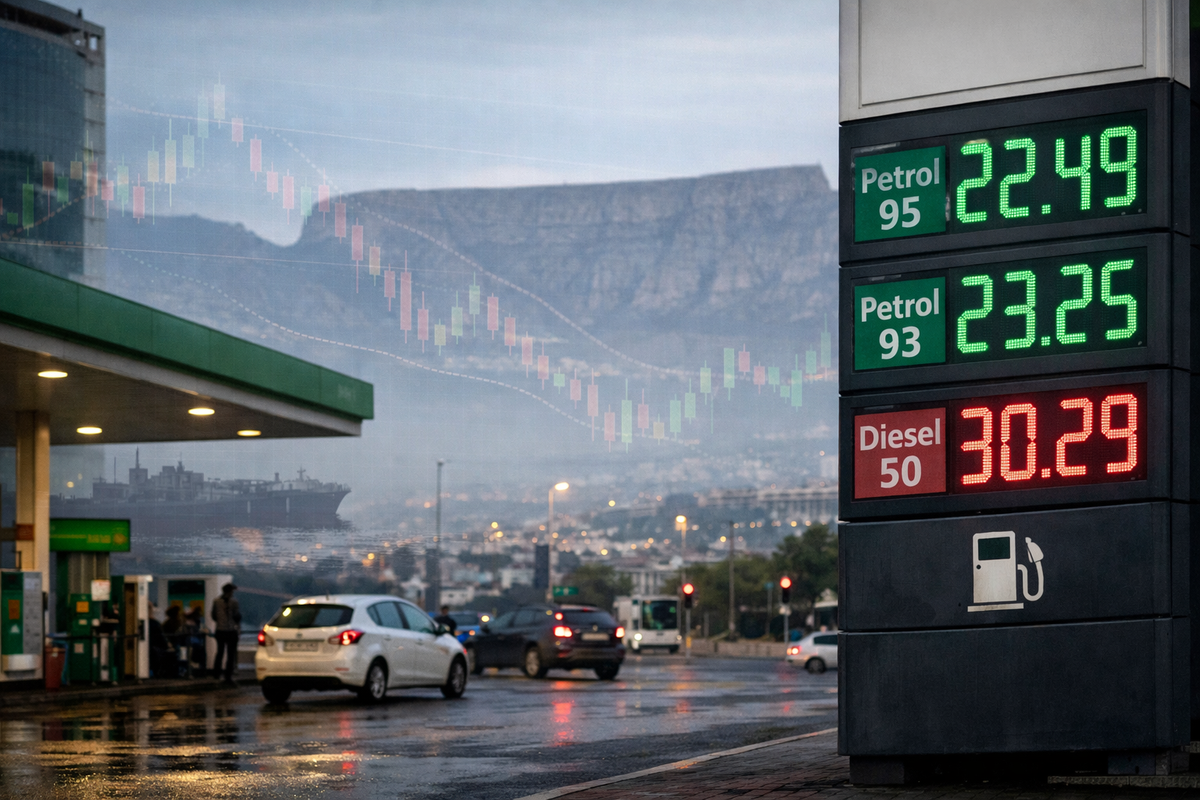
Our rainbow nation did not wake up to a local drama on Monday; it woke up to a global one. A U.S.-Iran standoff pushed oil back above $100 a barrel, the dollar firmed, and the rand slid to 16.5650 against the greenback in early trade, about 0.8% weaker than Friday’s close.
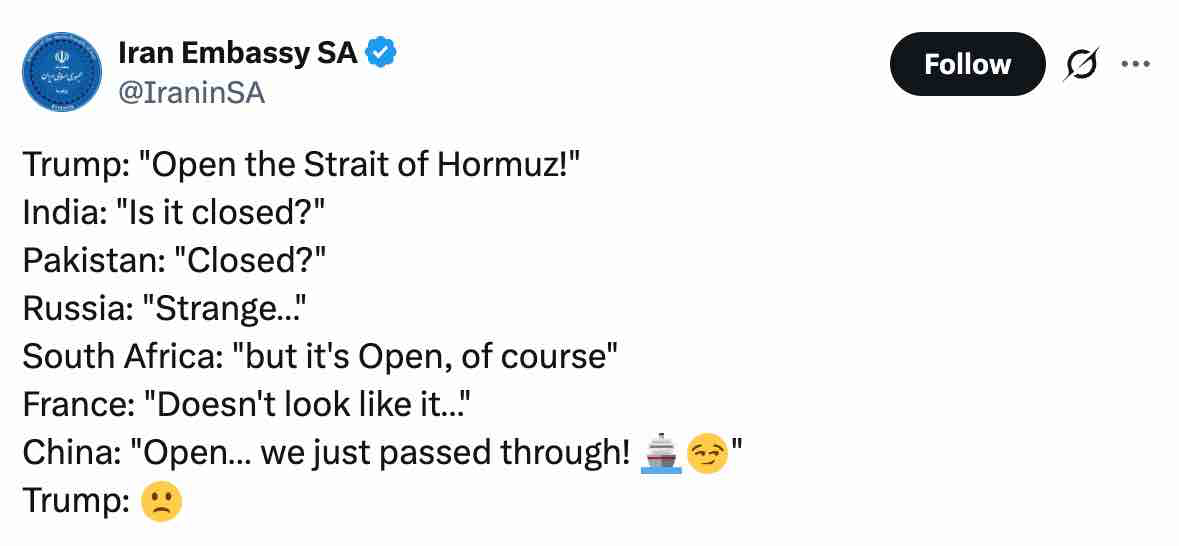
While Iran's posts on X are viral (and hilarious), local wallets are still feeling the tension, and they do not need a war map to notice what follows. Rand-as-risk-barometer swings and petrol-price maths have a way of drifting from trading desks into everyday life with rude efficiency.
South Africans know the routine by now: one ugly overseas headline can show up a week later in fuel, Ubers, imported groceries, online subscriptions, travel plans, and any checkout with a dollar in the background.
Fuel-price spike budgeting isn't a paranoid little side project anymore, and cheap import illusions aren't always cheap once currency pressure and shipping risk factors are considered.
Why Monday unravelled
Hormuz is not some distant geography lesson
The Strait of Hormuz is one of the world’s key oil routes. Weekend developments regarding a U.S. naval blockade on Iranian-linked shipping pushed Brent up 7.0% to $101.87 and WTI up 7.5% to $103.83 by early Monday trade. Markets did what markets do when oil supply is uncertain: they ran toward the dollar and away from risk-sensitive currencies, with the rand among the first to weaken under pressure.
SA pays for global nerves in very local ways
South Africa buys oil in dollars, and the official fuel-pricing structure uses an import-parity model. A stronger dollar and pricier crude added substantial pressure in that formula.
DMRE’s April fuel statement indicated that the average Brent price in the review period rose from $69.08 to $93.67, shipping costs rose because of the Middle East conflict, and the rand weakened on average from 16.00 to 16.64 per dollar, which lifted the Basic Fuel Price contribution by 56.18 cents a litre for petrol and more for diesel and paraffin.
How are South African wallets affected?
Petrol and diesel
Driver sprawl doesn't need an economist to explain why fuel sets the tone for the rest of the month. A longer commute from the "'burbs", school-drop loops, or one extra weekend mission across town can force a weak-rand week budget reshuffle.
Fuel prices are regulated locally, but the base calculation is global, which is why offshore disruptions feed through to the forecourt with depressing consistency.
Ubers, delivery fees and small convenience spending
Petrol doesn't only affect people with car keys. Delivery platforms, ride-hailing, and service businesses price transport somewhere along the line.
South Africa's “let’s grab something quickly” culture quickly becomes expensive when transport costs increase in the background. You don't need a day-one formal announcement because pricing pressure filters through gradually over time.
Imported goods and online shopping
Fashion, sneakers, beauty products, gaming gear, phones, accessories, and random little “treat yourself” parcels from abroad look different once the rand buckles and shipping risk increases. Currency conversion, VAT, duties, courier admin, and freight costs can turn a cute offshore cart total into a comedy routine without a punchline.
A weaker rand does not ask whether the purchase was essential, impulsive, or your “one thing for the month”. It charges all three the same disrespect.
Why does the rand react like this?
South Africa is liquid, tradable, and exposed
Global desks use the rand as a quick proxy for broader emerging-market risk. Reuters indicated that the dollar strengthened while the rand weakened on Monday, and local bonds also sold off, with the benchmark 2035 yield rising 11.5 basis points to 8.515%. None of this requires a fresh domestic scandal; global positioning can overpower the local story in the short term.
Oil is an inflation headache, not only an energy story
Oil above $100 revives inflation anxiety globally. Even gold slipped on Monday because a stronger dollar and higher oil raised concerns about persistent inflation and fewer rate cuts.
Translation: one energy scare can spread into currencies, bonds, commodities, and interest-rate expectations all at once.
How South Africans can respond without becoming doom-preppers
Watch three things, not thirty
- Brent crude
- USD/ZAR
- DMRE fuel updates
Those three will tell you more about near-term pressure than most timeline commentary.
Delay the nice-to-have dollar purchases
Imported gadgets, fashion, and app subscriptions look less charming in a weak-rand pocket. A pause of a week or two can really save you money when markets are volatile as h*ll.
Top up transport money before the next scramble
SA is not designed for gentle, walkable convenience for everyone. Many people rely on fuel, taxis, e-hailing, or some combination of the three. A small transport buffer is less glamorous than brunch, but it is also less likely to catch you off guard by mid-month.
Check recurring card charges
Streaming, cloud storage, software tools, gaming subscriptions, and random “free trial” nonsense can cost more when the rand is under pressure. A weak currency is a useful excuse to do a quick cancellation sweep.
Monday’s rand wobble was not a niche market event for finance people in Sandton. SA pays attention because global oil fear can turn up in your tank, your Uber history, your imported basket, and your weekend plans before anybody says “macro” with a straight face.
What to watch next
Oil is the main character for now. Any sign of easing tension regarding Hormuz could cool prices, while more escalation could drag the rand and inflation expectations further in the wrong direction.
DMRE’s own pricing notes showed how quickly crude, shipping costs, and the rand can feed into the local fuel formula. You don't need a crystal ball; you only need a slightly less casual attitude to global headlines that affect household budgets.



Comments ()