
Side-hustle payments, and avoiding chargebacks, scams, and ‘proof of payment’ BS
Getting paid should not be the most stressful part of a side hustle. From screenshots to reversals, this is what to watch for before you release work or goods.
🔴 You might also like to read:
 Anchen Coetzee
Side hustles do not fail because the work is bad. They fail because payment gets messy, late, disputed, “reversed,” or trapped in someone else’s admin. If you are getting paid via instant cellphone payments and bank-to-bank transfers, a few small habits will save you a lot of grief.
Payment scams also target people who sell services, not only people who shop online. The same logic applies to buyers and sellers: use methods with chargeback protections when you need recourse, and treat screenshots as entertainment, not evidence.
The problem is not getting clients, it’s getting paid cleanly
Millennials are juggling WhatsApp orders, weekend gigs, consults, content, tutoring, nails, coaching, lifts, resale, and “one quick job”. Money moves through EFT, PayShap, card taps, payment links, cash sends, PayPal, crypto, and the occasional “my cousin will pay you tomorrow.”
Every rail has a different risk profile:
- EFT and instant EFT-style payments: Great for certainty once the money has landed and cleared, terrible for disputes after the fact. The Reserve Bank has warned that EFTs are final and consumers often cannot dispute them if something goes wrong.
- Card and wallet payments: Better buyer protection, which can become your problem as a seller. A client can dispute, and you may need to prove you delivered what you promised.
- Instant payments (PayShap and similar): Convenient, with limits and fees that vary by bank and have changed over time.
Your payment method is part of the product. Clients rarely remember your Canva deck or your cupcake icing. Clients remember a smooth handover, a clean invoice, and zero drama about money.
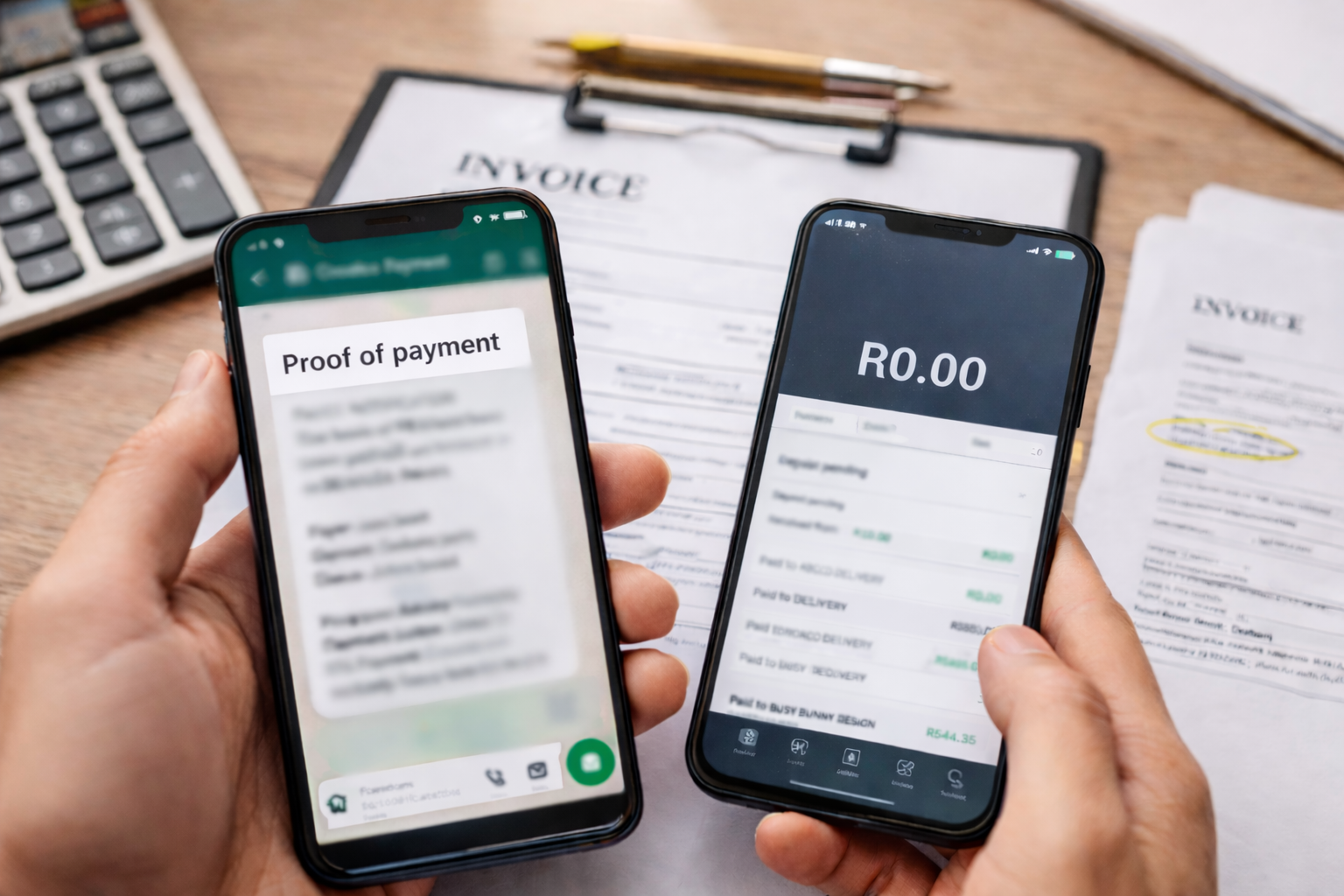
“Proof of payment” is not payment
A screenshot is not a settlement. A PDF “confirmation” is not a settlement, and neither is a WhatsApp voice note saying “I sent it.”
Scammers exploit the gap between “a transfer was initiated” and “money is in your account.” SABRIC has documented cases where a proof of payment was falsified to push a seller into releasing goods.
A rule you can live by
Release nothing, deliver nothing, start nothing that costs you money until one of these is true:
- The funds reflect in your account balance (not “pending”), or
- Your payment provider dashboard shows the payment as settled, and you can match it to an invoice number.
If your bank app has not shown the money in your balance, you have not been paid.
Chargebacks: how they happen, and how to reduce them
A chargeback is a dispute raised by the cardholder via their bank. Sometimes it is valid (fraud, non-delivery, broken service). Sometimes it is messy (a client regrets it, a family member used the card, someone forgets what the charge was).
Visa’s public guidance notes a common time window of around 120 days for many disputes. You cannot prevent every dispute, yet you can reduce your odds of losing one.
A side-hustler’s chargeback defence kit (boring, effective)
- Invoice with a clear description: What you sold, delivery date, revision limits, and cancellation terms.
- Written acceptance: A WhatsApp message counts if it is clear and tied to the invoice.
- Proof of delivery: Screenshots of sent files, access logs, courier tracking, signed handover, and photos at collection with a timestamp.
- Matching names: If the payer name does not match the client, stop and confirm.
- No vague descriptors: “Services” invites disputes. “Logo design package, 2 concepts, 2 revisions” gives you a defensible record.
Chargebacks punish vague work. Specific scope, written acceptance, and proof of delivery turn a “he said, she said” into a paper trail.
The scam menu South Africans keep seeing
You will see variations of these across Marketplace, Instagram DMs, WhatsApp groups, and “referrals.”
- Fake proof of payment
They send a convincing “confirmation” and push urgency so you release the goods. SABRIC has examples of falsified proofs of payment used in vehicle scams. - The “overpayment” and refund trap
They “accidentally” pay too much, then demand you refund the difference, often to a different number or account. The original payment later fails, reverses, or never existed. - The “bank reversal” voice note
They claim you must “authorise” something to reverse fraud, then talk you into approving a payment in your app. Banks repeatedly warn about social engineering like this. - The payment link clone
They send a link that looks like a bank or courier page, but it is a phishing page. One login later, your account is the side hustle.
A payment policy that keeps you paid and sane
This is the part most side hustlers skip, then regret.
1) Pick one default payment method per type of work
- Digital services (design, consulting, tutoring): invoice + deposit, balance before final delivery
- Physical goods: deposit to confirm, balance before collection, or pay on collection with verified settlement
- Retainers: fixed date, monthly debit order, or invoice paid upfront
2) Use deposits like an adult, not like a villain
A deposit is not greed; it is risk-sharing. It covers your time and filters out time-wasters.
3) Set “release rules” in writing
Send one message before work begins:
- “Work starts after payment reflects.”
- “Final files release after balance clears.”
- “No third-party couriers unless paid and confirmed.”
4) Treat urgency as a red flag
Scammers lean on urgency because verification ruins the plan.
When something seems off, use this 60-second checklist:
- Does the payer name match the client?
- Has the money reflected in your balance, or is it only a screenshot?
- Are you being pushed to release immediately?
- Are you being asked to refund to a different account?
- Are you being asked to click a link to “confirm” or “receive” money?
If two answers are “yes”, stop the transaction.
🔴 You might also like to read:
 Liz Thorne



Comments ()