
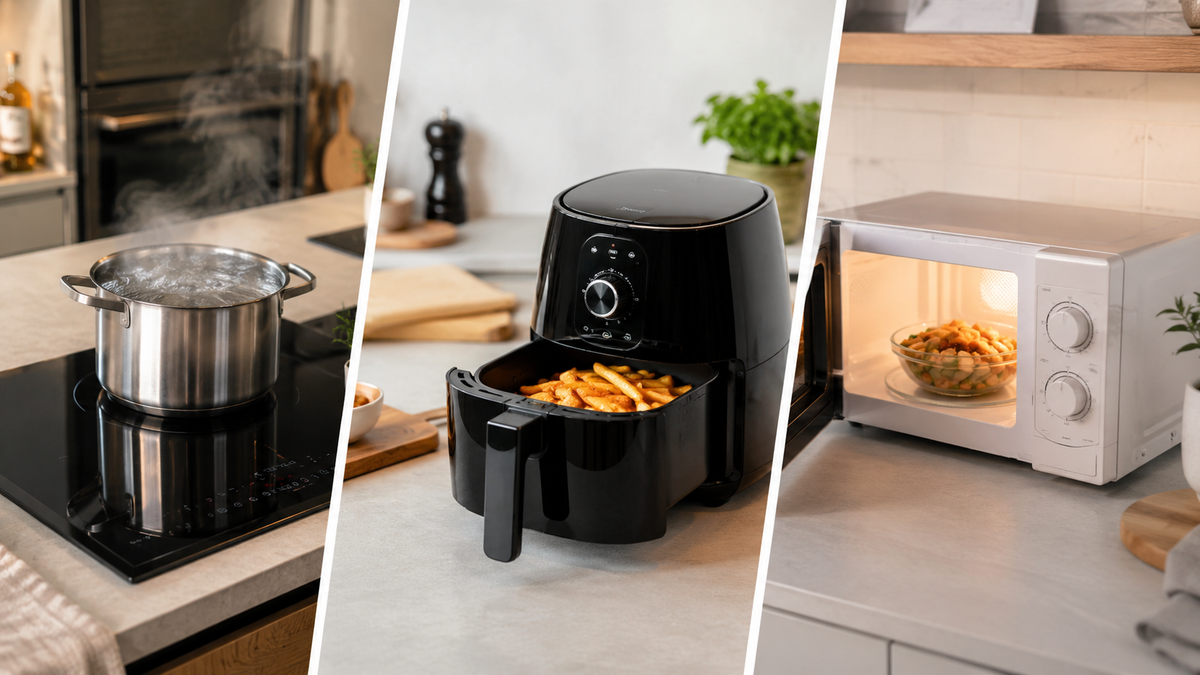
Choosing the cheapest appliance is not always as simple as looking at the price tag or the wattage printed on the box. Microwaves, induction plates and air fryers each have strengths, and the most economical option depends on what you are cooking and how long it takes.

You cannot determine electricity use from wattage alone. A 1,500W appliance used for ten minutes consumes less electricity than the same appliance used for half an hour, which means the meal and cooking time decide the result.
LookSee gives broad power ranges of 1,500W to 3,000W for induction plates, 1,500W to 2,300W for air fryers and 850W to 1,800W for microwaves. Your model may differ, so check its label before calculating use.
Use the microwave for quick, moist meals
Choose the microwave when you want to heat leftovers, cook porridge, steam vegetables or warm a small portion. A short cycle can use less electricity than heating a pan or air-fryer basket for the same job.
The result changes when you want browning or crisp food. A microwave heats food quickly, although it might not give chips or chicken the same finish as dry heat. Measuring electricity use at the plug could give you figures from your own kitchen instead of a general estimate.
 Liz Thorne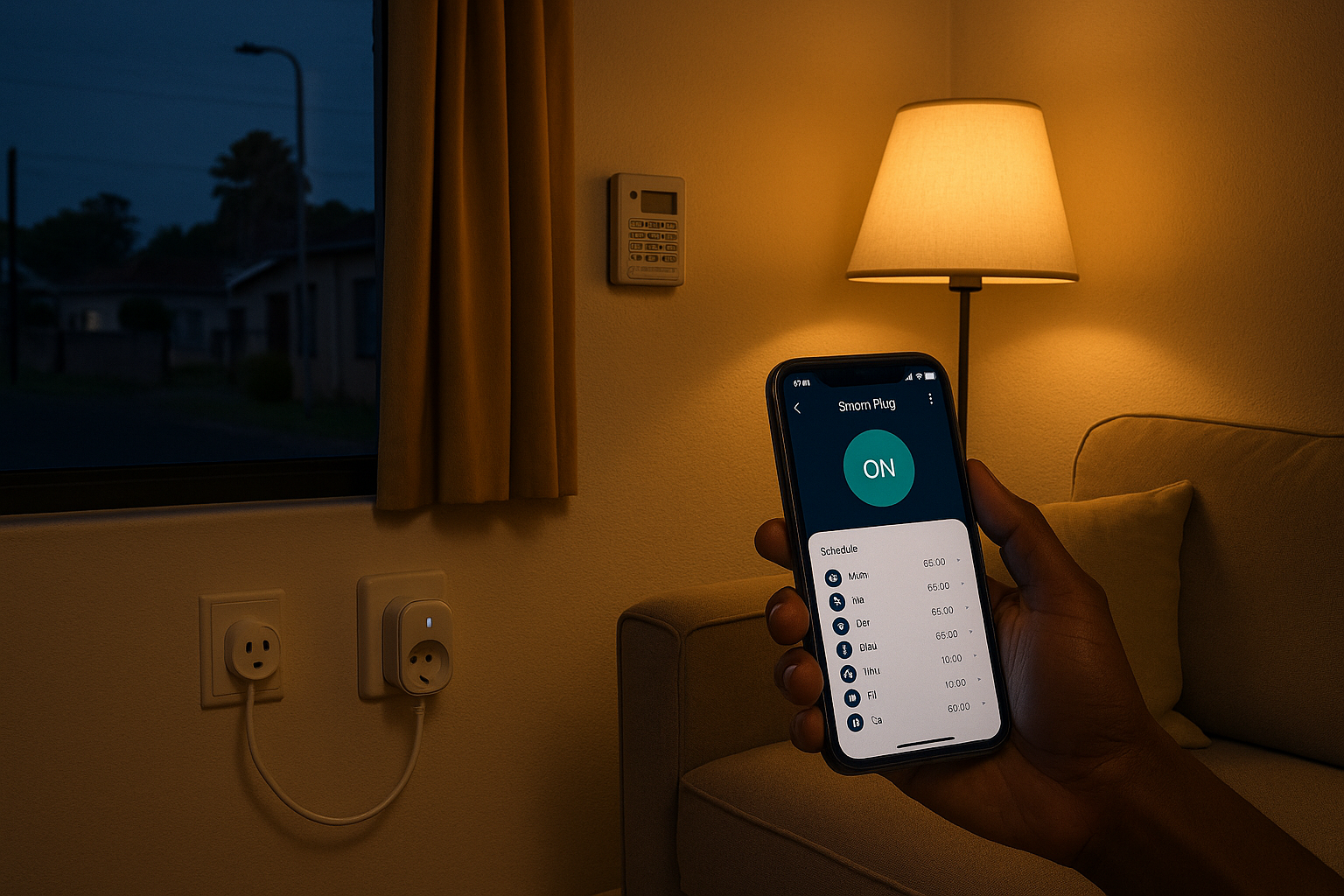
You do not need one appliance to do every job. The cheaper choice is the appliance that finishes your meal in the shortest suitable time and gives you the result you want.
Use induction for pots and pans
Choose an induction plate for eggs, rice, pasta, soup, sauces and one-pan meals. Use a pan that matches the cooking zone, place a lid on the pot where suitable and lower the heat once the food reaches temperature.
Eskom advises households to match pots with stove plate sizes and use a microwave for small to medium portions. Repair access after a fault also belongs in the buying decision when you compare a new induction plate, microwave or air fryer.
 Liz Thorne
Use the air fryer when texture counts
Choose the air fryer for smaller portions that need browning, such as chips, vegetables or chicken pieces. Basket size affects the result because several batches can erase the electricity advantage over a larger cooking appliance.
Calculate your own cost
Divide the appliance wattage by 1,000, then multiply the answer by the hours used. A 1,500W appliance used for 20 minutes consumes 0.5kWh before thermostat cycles or power adjustments.
The City of Cape Town notes that the wattage on a label reflects maximum use and recommends a watt-meter for measured use over time. Extended warranty cover affects possible repair costs, not the electricity used to prepare a meal.
 Liz Thorne
Your microwave wins on many short jobs. Your induction plate handles pot meals without heating a full oven. Your air fryer earns its electricity when crisp texture is part of what you want to eat.
Start with the food, portion size and result you need. Check the wattage, record the minutes and compare kilowatt-hours instead of relying on appliance type alone. The most useful figure is the one measured in your kitchen, with the meals you prepare every week.


Comments ()