
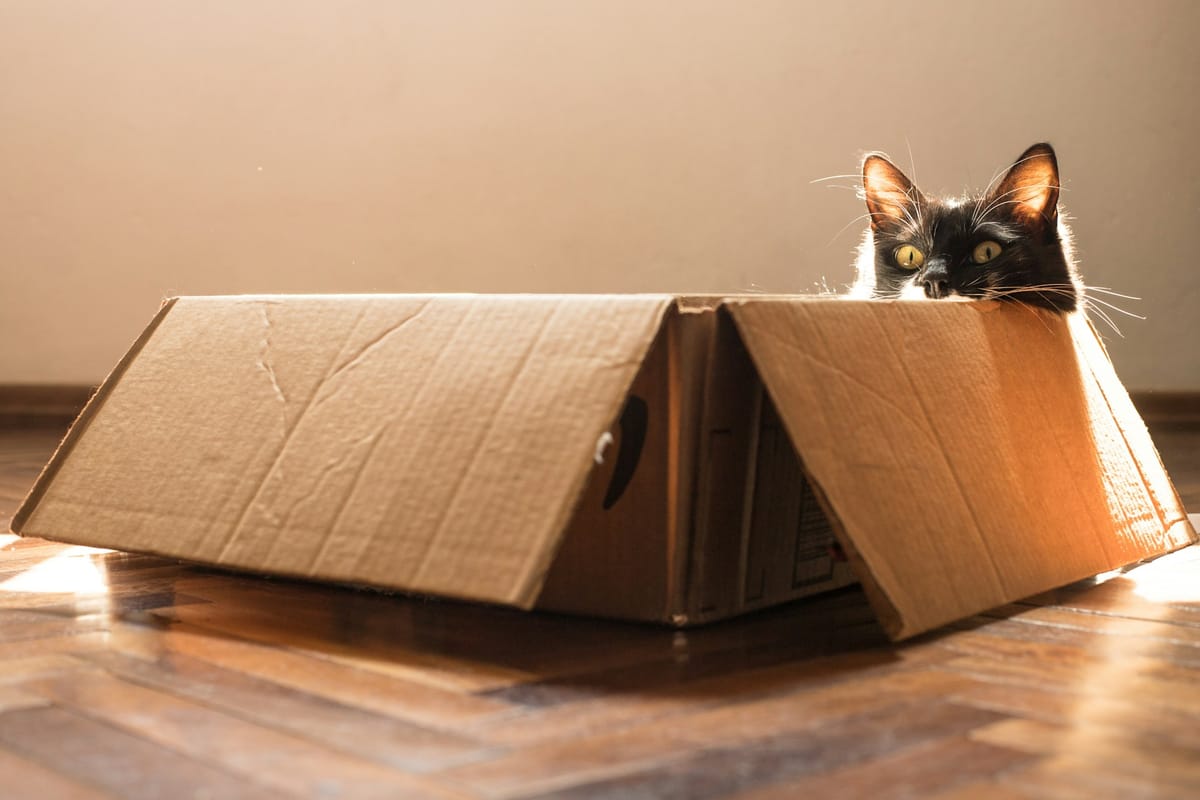
A cardboard box can go from packaging to household fixture surprisingly quickly. What starts as a sensible backup can turn into a small collection you cannot quite bring yourself to recycle.




You know the box. The appliance works, the shoes fit, the courier delivered weeks ago, and the return date has passed. Throwing out the carton still seems premature, because the day after recycling day is obviously when an urgent box-shaped problem will appear.
Saving it had a purpose at first. Under the Consumer Protection Act, original packaging can affect what a supplier may charge in certain Section 20 returns, depending on the condition of the goods and packaging. Once the relevant return period or store policy is finished, the carton enters a different phase of household life.
It starts with one very good box
One carton behind a cupboard looks harmless, then another slides underneath it. Soon you have the appliance box, the sturdy shoe box and one smaller carton nobody may touch because, apparently, it is an excellent box.
Cardboard is promoted quickly at home. Delivery packaging becomes future moving material, emergency storage, a parcel box and a Christmas-decoration candidate without doing any of those jobs. After a while, throwing it out can seem wasteful even when you cannot remember what was inside it.
Online shopping can make the carton seem worth keeping because delivery, packaging and returns have already made it seem important. The same little calculation can appear when online checkout costs turn one purchase into several decisions.
Every box suddenly has a future career
Give yourself thirty seconds and almost any carton can find a hypothetical purpose. South Africa’s waste management hierarchy puts reduction and reuse before recycling, which gives packaging another route when a second purpose already exists.
Passing a box to someone who is moving, donating it or saving one for a parcel is different from building a cardboard skyline above the wardrobe. It is the household version of borrowing something for a once-off job instead of owning every item you might want one day.
Eventually, the cupboard gets a vote
Give each carton a job, and “maybe” does not qualify. Once the return period has passed, the product works and you cannot name a purpose, flatten the box and reclaim the space.
Fibre Circle has a national waste-facility locator with buy-back centres, community collection points and drop-off sites if recycling is next. Knowing your return rights and store policies first can help you decide which packaging gets a short stay.
You do not have to throw out every box the minute a parcel is opened. You also do not owe every sturdy carton a retirement plan. A second life needs an actual second job.
The cardboard pile usually starts with a sensible reason, then somehow earns space long after that reason has expired. There is a difference between saving one box because you know exactly what you will use it for and keeping every sturdy carton because it might become useful one day. At some point, clearing the cupboard is not wasting a good box, it is admitting that possibility alone does not deserve permanent storage.

 Lynette Spencer
 Lynette Spencer
 Naomi Roebert
 Mariana Balt



Comments ()