
2026 Credit score strategies that don’t need a finance sermon
A strong credit score in South Africa has less to do with income and more to do with consistency. Here is how to get there without the lecture.
🔴 You might also like to read:
 Liz Thorne
Credit scores in South Africa have a weird superpower: they punish chaos, then reward boring. Millennial life is rarely boring, so the trick is building a score that survives debit orders and that one month where everything went sideways (aka Januworry, Febru-regret, April Tax Scaries, you name it...).
Many people tank their score through buy-now-pay-later traps they never meant to live on. A score is also dragged down by small choices you repeat, like how you pay, how you split spending, and whether you understand retail loyalty and card rewards maths before you swipe.
Your credit score is not a personality test, but a payment history with a memory like an elephant.
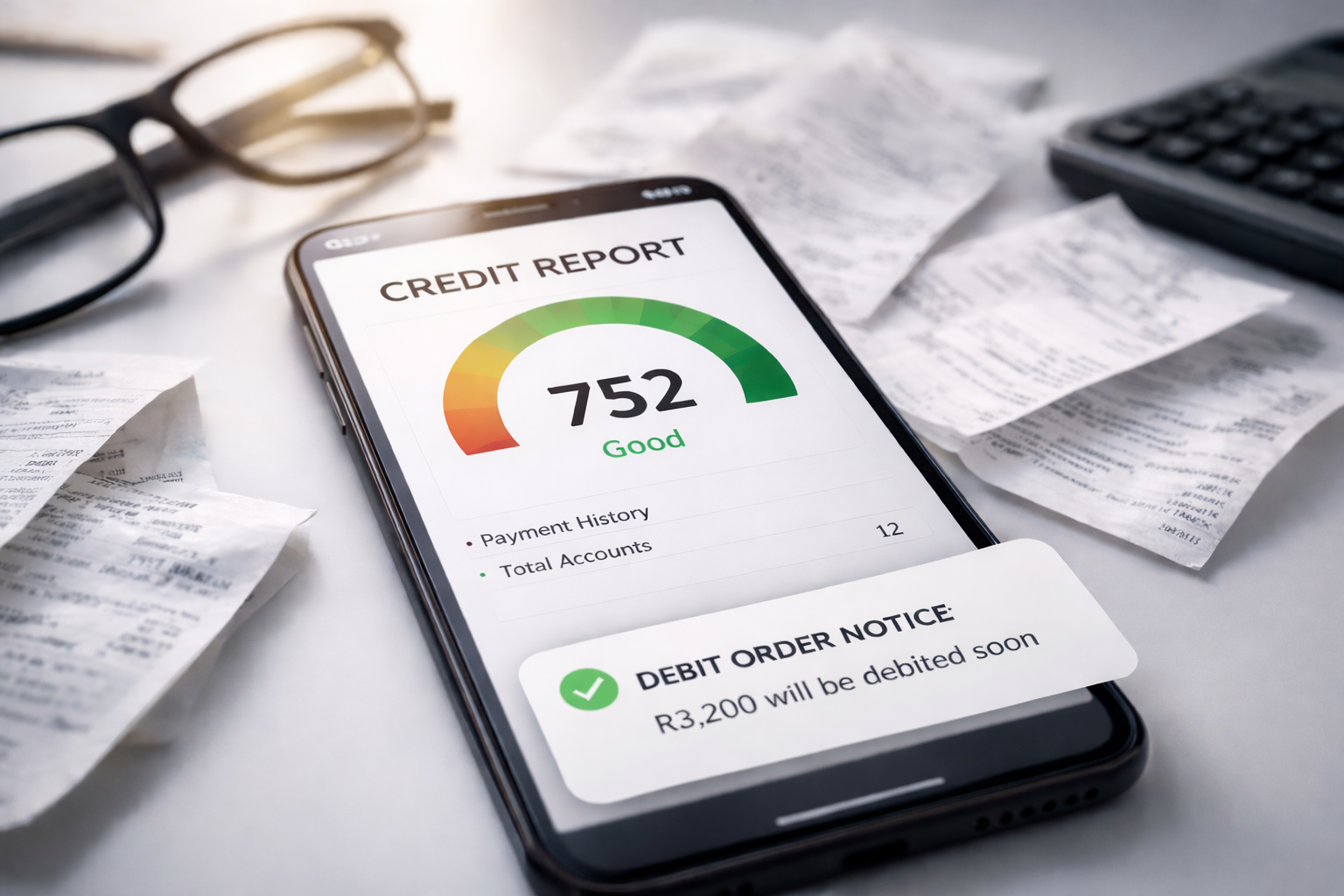
Start with the one move that beats every hack: check your credit report
A credit strategy without a report is shadowboxing. South Africans are entitled to at least one free credit report a year from each registered credit bureau.
Do this first:
- Pull your report from at least TransUnion and Experian. Both point you to free access routes and show dispute options.
- Look for the boring killers: missed payments you forgot about, accounts you closed that still show open, weird duplicates, and enquiries you do not recognise.
- Dispute the wrong info properly. The National Credit Regulator has a consumer guideline on complaints about disputed or inaccurate credit information.
Your report is where the damage is visible. Sorting it out is not glamorous, but it is the fastest route to a score that stops acting like you owe money to the universe.
Pay on time, then pay earlier than on time
Payment history is the foundation, because it is the cleanest signal lenders have about risk. Missed payments do more harm than most people expect, especially if they stack. (Different bureaus and lenders weigh factors differently, yet payment behaviour is always central.)
Tactics that work in the real world:
- Move due dates to just after payday if you can. One aligned date beats five random ones.
- Use debit orders for minimums, then do a manual top-up payment when you have more cash. Minimums prevent accidental missed payments. Top-ups reduce interest and balances.
- If money is tight, pay something before the due date rather than going silent. Lenders and bureaus can only record what happened, not what you meant to do.
On-time payments are the “gym” of credit building. Nobody posts about it, but it changes the outcome.
Stop making your credit card look maxed out
Your statement balance is a billboard. Even if you pay in full later, a high balance at statement date can look like strain.
Clean ways to fix that:
- Pay twice a month (mid-month and just before the statement). This drops the reported balance without changing your lifestyle.
- Keep your utilisation low where you can. Many credit education sources use 30% as a broad ceiling, with lower being better.
(Local lenders can run their own models, so treat this as a guiding number, not a religious rule.) - If you have multiple cards or accounts, spreading spend can lower the utilisation on any single line, provided you can still pay them without slipping.
Avoid credit applications like they are free samples at a supermarket
Every credit application that triggers a hard enquiry can dent your score for a while, and too many enquiries can look like desperation.
So...
- Do not apply for credit “to see if you qualify”.
- Batch your shopping. If you truly need a loan, do your comparisons in a tight window and pick one route.
- Treat retail store accounts like credit products, because that is what they are.
Build a “thin file” without becoming a debt collector’s pen pal
Some South Africans have the opposite problem: they avoid credit so much that lenders have little to nothing to score. If your file is thin, you want one or two accounts that report consistently, then you use them in a controlled way.
Examples that can work (depending on your bank and profile):
- One credit card with a limit you can manage, used for predictable spend (petrol, groceries) and paid early.
- A small service contract that reports, paid by debit order.
The goal is a stable pattern, not “more credit”.
Credit building is proving that you borrow like an adult and repay like a machine. No drama, no mystery, no disappearing acts.
Fix the admin chaos that creates “accidental bad credit”
A shocking amount of credit damage comes from admin, not overspending.
Watch these:
- Old accounts: closing an account does not guarantee the report updates cleanly. Check that it shows as settled or closed.
- Bank detail changes: switching banks or cards can break debit orders and cause late payments.
- Subscription creep: small recurring charges can push an account into arrears when you thought it was dormant.
If you see something wrong on your report, dispute it. Experian and TransUnion both point consumers to routes for access and correction, and the NCR guideline explains complaint handling for disputed credit information.
Handle “bad months” without setting your score on fire
Bad months happen. The move is preventing one bad month from turning into six.
When cash is tight:
- Prioritise accounts that report to bureaus (loans, credit cards, store accounts).
- Call the lender before the due date and ask about payment arrangements. You want a recorded plan, not wishful thinking.
- Avoid taking new credit to pay off old credit unless you have a clear, cheaper repayment path and the maths works.
If your report shows a debt counselling or review flag that you believe is wrong, SACRRA points people toward the NCR for disputes on that specific marker.
Use free tools, not paid panic
Plenty of credit products try to sell fear, then charge a fee to “help” you feel better. Start with what you can access for free.
- Experian highlights free access routes and the ability to dispute incorrect information via its platforms.
- TransUnion highlights the statutory free annual credit report.
Paid monitoring can be useful for fraud alerts, yet most people need the basics done properly first.
The 2026 “grown-up” checklist
No sermons, no motivational posters. Do these, and your score usually follows:
- Pull your reports, then clean errors.
- Pay on time, then earlier than on time.
- Keep statement balances low, even if you pay in full.
- Apply for credit rarely and intentionally.
- Keep admin tight so debit orders do not break.
- Treat “bad months” as a logistics problem, not a shame spiral.
🔴 You might also like to read:
 Liz Thorne
 Liz Thorne


Comments ()